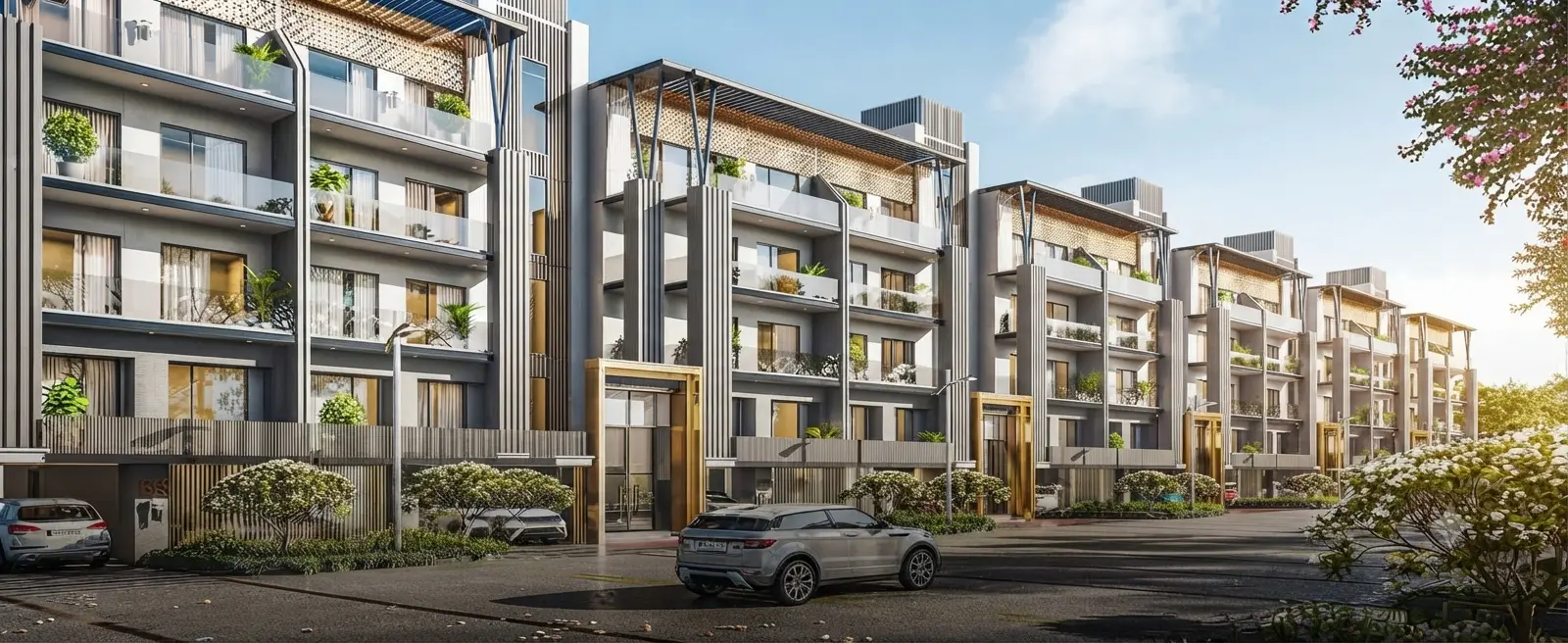
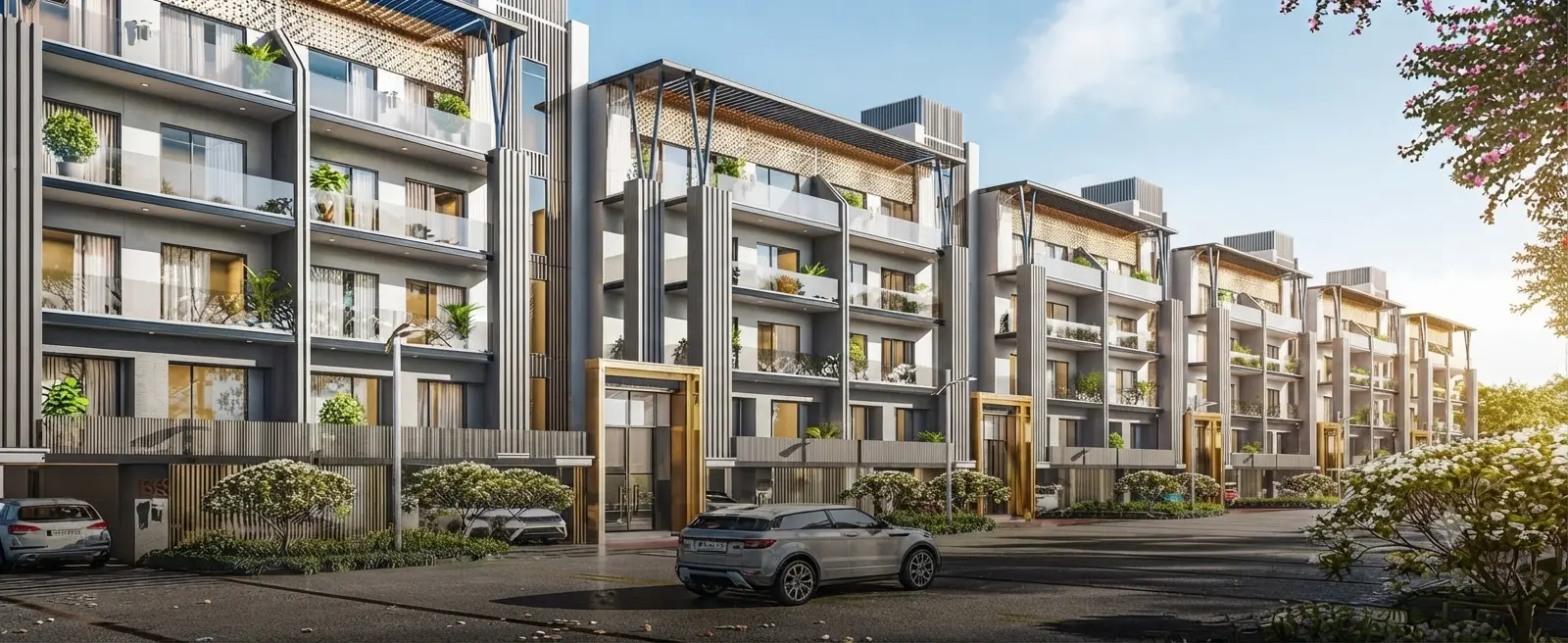
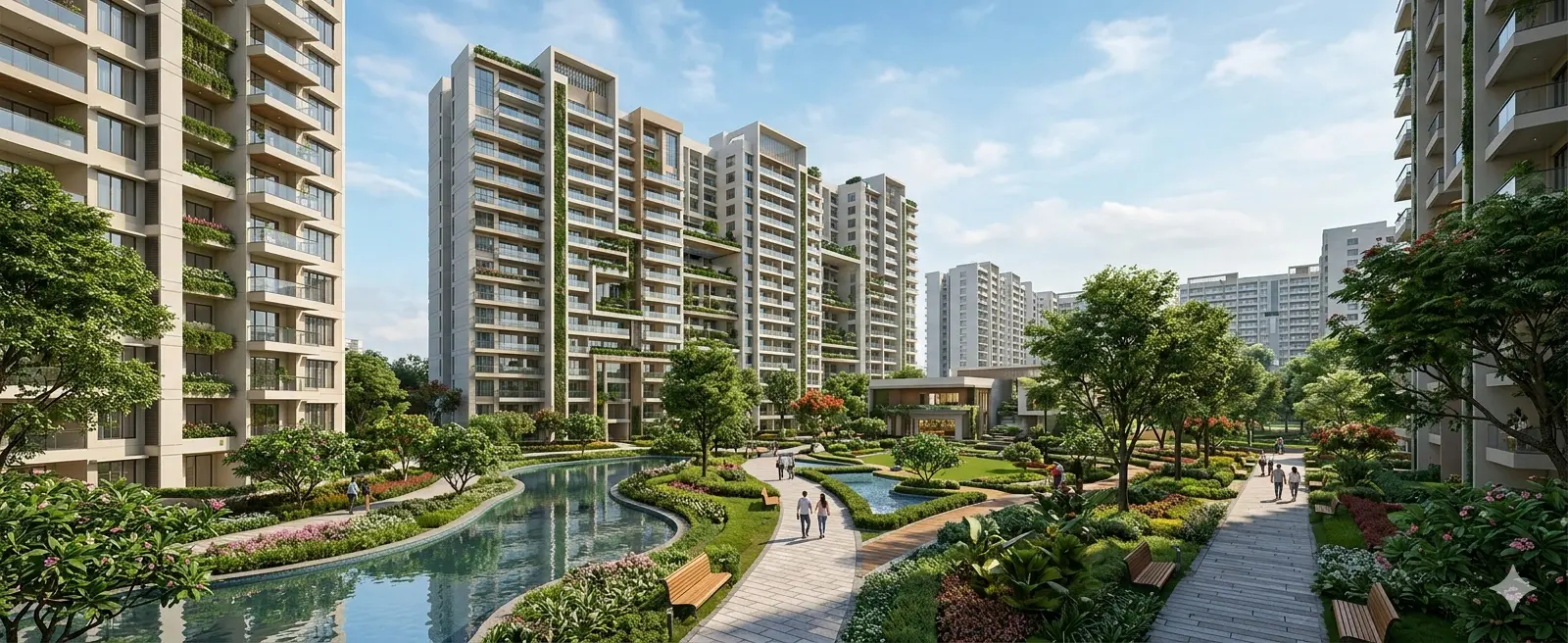
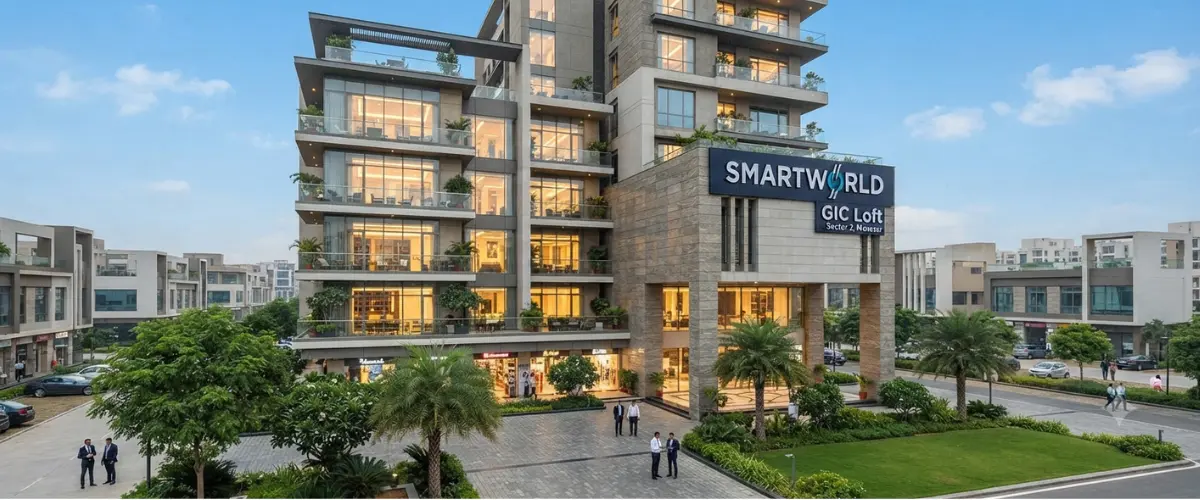
If you have done even a little research on Smartworld Orchard, you have likely noticed something odd: half the listings state it is still under construction, the other half claim it is ready to move in, and almost every site simply lists "Flexible" under the "Payment Plan" section without providing any specific figures. This isn't because you missed something; rather, this reflects the actual state of online information regarding the project. Smartworld Orchard has gone through various stages—new bookings, the pre-possession phase, and post-OC resale—yet most portals failed to update their content as the project's status changed.
This guide aims to bridge that information gap. We won't stop at merely mentioning a "flexible payment plan." We will provide a detailed breakdown of the installment schedules, explain the implications of receiving the Occupancy Certificate (OC)—specifically how it directly impacts your GST liability—and clarify which of the two available plans is best suited for homebuyers versus investors.
Quick answer: Smartworld Orchard previously offered two types of payment plans: a 10:90 subvention plan and a 30:30:40 possession-linked plan (CLP). Depending on the specific phase, tower, and inventory status, some units are now being sold as 'ready-to-move' resale properties. This completely changes the payment structure (eliminating construction-linked installments in favor of loan-linked or full-payment schedules). Be sure to verify which plan applies to the specific unit you are considering, as the status can vary by phase.
Smartworld Orchard: Price & Project Snapshot
Detail
Range (as reported across listings)
Configuration
2, 2.5 & 3 BHK low-rise independent floors
Unit size
~1,100 – 1,800 sq. ft.
Price range
₹1.68 Cr – ₹2.98 Cr* (varies sharply by tower/phase — see disclaimer below)
Land parcel
~20–25 acres
Location
Sector 61, Golf Course Extension Road, Gurugram
Possession status
Mixed — some phases report Occupancy Certificate received; others show possession timelines into 2026
Disclaimer: Because listings across the web genuinely conflict on price and possession by phase/tower, treat every number above as a starting reference, not a quote. Get the current price list and payment plan document directly from the Smartworld sales desk or an authorized channel partner for the specific tower and unit you're evaluating, and cross-check the RERA registration on haryanarera.gov.in before booking.
The Two Payment Plans, Explained With Real Numbers
Brochures list these as "10:90" and "30:30:40." Here's what those ratios actually mean in rupees, using a representative ₹2 Cr unit as an example so you can scale it to your own budget.
Plan 1: 10:90 Subvention Plan
How it works: You pay 10% at the time of booking. The remaining 90% is typically funded through a bank loan, which is disbursed to the builder in stages during construction; however, you do not start paying EMIs on this 90% amount until you receive possession (usually, depending on the scheme's terms, the pre-EMI interest during the construction phase is covered by the builder or under a tripartite agreement).
On a ₹2 Cr unit:
Booking amount (10%): ₹20 lakh
Loan-funded balance (90%): ₹1.8 Cr, disbursed to the builder per construction milestones
Your EMI outgo during construction: typically ₹0 to minimal, if the subvention scheme is builder-subsidized (confirm this explicitly — see the mistake buyers make section below)
Who is this suitable for? Investors and homebuyers who are already paying home loan EMIs or rent and wish to defer large cash outlays until the property is ready for possession or sale. Essentially, it functions as a low-cost holding period.
One thing that is rarely explicitly stated: subvention plans remain effective only as long as the builder honors the commitment to cover pre-EMIs or interest subvention throughout the construction phase. If construction is delayed—as has happened with this project's timelines in the past—you might end up paying pre-EMI interest out of your own pocket for a longer duration than planned, or the subvention benefit could lapse due to specific clauses in the agreement. Do not rely solely on the single-page marketing flyer; instead, read the terms and conditions regarding the subvention scheme in the builder-buyer agreement line by line.
Plan 2: 30:30:40 Possession-Linked Plan (CLP)
How it works: A staged payment tied to construction milestones, front-loaded more than a typical CLP.
On a ₹2 Cr unit:
On booking: 30% → ₹60 lakh
On/during construction milestone(s): 30% → ₹60 lakh
On possession/completion: 40% → ₹80 lakh
Who this suits: This option is suitable for buyers who are arranging funds themselves or already have loan approval in place and wish to reduce the total interest payable over the loan tenure; unlike subvention schemes where interest accumulates, a significant portion of the principal is paid upfront here. It is also generally considered a lower-risk plan if you are uncertain about the builder's construction progress.
The Angle Every Other Page Misses: What Changes After the Occupancy Certificate
This is the part that matters most right now, and it's the reason so much online content about this project reads as outdated.
Once a project (or a specific tower/phase within it) receives its Occupancy Certificate (OC), two things change for a buyer:
GST treatment flips. GST applies to the purchase of under-construction property (currently 5% for non-affordable residential property, without the benefit of input tax credit). However, once a unit receives an Occupancy Certificate (OC) and is sold as a ready-to-move property (including resales), GST is not applicable; instead, you are required to pay stamp duty and registration charges on the sale price. If you are quoted a price inclusive of GST for a unit that has already received its OC, you should directly ask why GST is being charged.
The payment plan itself changes shape. Construction-linked or subvention plans are only appropriate when construction is actively underway. If the tower or unit being shown to you has already received its Occupation Certificate (OC), there is no basis to 'link' payments to construction progress; in such cases, you would typically pay the full price upfront or settle the amount in one or two installments—often via a home loan—rather than following a multi-stage Construction-Linked Plan (CLP) schedule. Some sales teams may still propose CLP-style plans as a negotiation tool (such as offering an 'early-bird discount' for full payment) rather than as a genuine construction-linked arrangement; therefore, it is important to understand the distinction before entering into negotiations.
Practical takeaway: Before you sign anything, ask the sales desk explicitly: "Has this specific tower received its Occupancy Certificate? Is GST applicable on this unit?" Get the answer in writing in the cost sheet, not verbally.
Hidden Costs Beyond the Payment Plan
The headline price and payment plan percentages never include everything you'll actually pay. Budget for:
PLC (Preferential Location Charge) — extra for corner units, park-facing, or specific floor preference; charged on top of the base price and usually not shown in the initial quote
IFMS (Interest-Free Maintenance Security) — a one-time deposit, typically charged per sq. ft.
EDC/IDC (External & Internal Development Charges) — government-linked charges that some builders bundle in and others itemize separately; ask explicitly
GST (if applicable) — see the OC discussion above
Stamp duty & registration — in Haryana, this is a meaningful percentage of the sale/circle-rate value and is separate from any builder payment plan
Club membership / one-time facility charges — often optional-sounding in the brochure but frequently pushed as near-mandatory at possession stage
A payment plan that looks like "just 30:30:40 on the base price" can end up 12–18% higher once these are added. Ask for a full cost sheet — not just the base price sheet — before comparing plans across projects.
CLP vs Subvention: Which One Should You Actually Pick?
Factor
30:30:40 (CLP)
10:90 (Subvention)
Upfront cash needed
High (30% at booking)
Low (10% at booking)
Total interest cost
Generally lower
Can be higher if subvention window lapses
Risk if construction delays
Lower — you pay as work progresses
Higher — pre-EMI exposure can extend
Best suited for
Self-funded buyers, risk-averse buyers
Investors holding for resale, buyers deferring cash flow
Loan sanction complexity
Standard
Requires tripartite agreement — more paperwork, some banks are selective
Our honest take: If you plan to reside in the unit and have 30% of the funds ready, a CLP (Construction Linked Plan) significantly reduces your risk—eliminating the fear that the builder might fail to honor their subvention commitments. If you are an investor with a clear exit strategy prior to possession, the lower upfront cost of a subvention plan can boost your IRR; however, this is contingent upon you independently verifying—rather than relying solely on the sales team—the actual duration of the subvention period and the implications of its expiry.
Common Mistakes Buyers Make on This Exact Project
Having tracked how these deals typically play out in Gurgaon's floor market, a few patterns repeat constantly:
Buyers assume the payment plan quoted on a portal is current. Given how stale and conflicting the listed data is for this project, always request the live cost sheet from the sales office dated within the last 7 days.
Buyers don't ask which tower/phase their unit sits in. "Smartworld Orchard" spans multiple RERA registrations and phases with genuinely different possession statuses. Two units in the "same project" can be on entirely different payment structures.
Buyers negotiate on base price only. PLC, IFMS, and EDC/IDC are frequently more negotiable than buyers realize, but only if you ask before signing the allotment letter — not after.
Buyers skip the RERA cross-check. Always verify the specific RERA registration number for the tower/unit on haryanarera.gov.in — not the number printed on an old brochure PDF.
Sector 61 & Golf Course Extension Road: The Investment Logic
The Sector 61 location on Golf Course Extension Road has benefited from major corridor developments—such as the Rapid Metro network and connectivity to Sohna Road and NH-8—along with the proximity of commercial hubs like Cyber Hub and established social infrastructure (schools, hospitals, and retail). Low-rise independent-floor homes in this area are generally preferred by those seeking a less congested living environment, as well as by investors aiming to resell or rent out the properties after possession.
FAQs
What is the current payment plan for Smartworld Orchard?
Historically two options have been offered — a 10:90 subvention plan and a 30:30:40 possession-linked plan — but the applicable plan depends on the specific tower/phase and whether that unit has already received its Occupancy Certificate. Confirm directly with the sales desk which plan applies to your shortlisted unit.
What is a 10:90 subvention plan in real estate?
It's a payment structure where the buyer pays 10% upfront and the remaining 90% is funded via a bank loan disbursed to the builder during construction, with the builder typically covering pre-EMI interest until possession — subject to the specific scheme's terms.
Which is better — CLP or subvention plan?
CLP generally suits self-funded, risk-averse buyers who want lower total interest cost. Subvention generally suits investors who want lower entry capital and have a defined exit or occupancy timeline. Neither is universally "better" — it depends on your cash position and risk tolerance.
Can I get a home loan for Smartworld Orchard?
Yes, in principle, subject to the bank's own approval of the project and the specific payment plan (subvention plans require a tripartite agreement between buyer, builder, and bank, which not every bank processes with the same ease as a standard CLP loan).
Is GST applicable on Smartworld Orchard units?
It depends on whether the specific unit/tower has received its Occupancy Certificate. Under-construction units typically attract GST; units sold after OC (as a completed property or resale) generally do not attract GST but will involve stamp duty and registration charges instead.
If you have done even a little research on the payment plan for Smartworld Elie Saab, you have likely noticed something odd: different websites quote different prices. One site states that apartments start at ₹1.81 crore. Another lists the price at ₹1.99 crore. According to a third site, the branded units start at ₹13.95 crore. It is the same project, yet the prices vary significantly.
A ₹1.50 Cr loft with a promised ₹60,000/month accrual sounds like a clean 4.8% pre-launch return before you've even taken possession. Before you sign an EOI, here's what that number actually means — and what nobody's payment-plan brochure will tell you about it.
This is not a brochure rewrite. It's a working investment audit: the price math, the realistic rental yield, the hidden costs, and the honest risk profile of buying into a hospitality-managed loft format in a corridor that's still proving itself.
Most articles about Smartworld One DXP will tell you it's "well-connected to IGI Airport" and leave it at that. That's not useful if you're about to commit ₹4.5 crore or more.
Here's what actually matters about this location — the infrastructure converging here, what it means for your daily commute right now, and why investors who bought in Sector 113 two years ago are already sitting on significant appreciation.
Why Sector 113 Is Not Just "On Dwarka Expressway"
Dwarka Expressway runs 29.5 km. Every project between Sector 99 and Sector 114 claims to be "on Dwarka Expressway." That's meaningless.
Sector 113 is different — and here's why it matters:
It sits at the Delhi–Gurugram border. Cross the sector boundary and you're in Dwarka, Delhi. That's not a marketing line; it's a geographic fact that has direct implications for connectivity, security, and long-term land value.
When buyers in Sector 103 or 106 say "close to Delhi," they mean 15–20 minutes by car. From Sector 113, Dwarka Sector 23 is a 5-minute drive. That difference compounds when you're calculating time cost daily over years.